- 06 Mar 2020
- Justformsolutions
- BLOG
- Comments: 0
How BIM Is Revolutionising Aluminium Formwork Engineering
From Traditional Formwork Drawings to Intelligent, Data-Driven Engineering
The construction industry is undergoing a significant digital transformation. Building Information Modelling (BIM) is at the forefront of this evolution, changing how buildings are designed, coordinated, constructed and managed.
However, one area where BIM has enormous potential, yet remains relatively underexplored, is aluminium formwork engineering.
Aluminium formwork is not simply about manufacturing panels and assembling them on-site. It involves complex engineering considerations, dimensional accuracy, panel optimisation, connection detailing, manufacturing precision and construction sequencing.
This is where BIM can make a fundamental difference.
1. Beyond 2D Drawings: Moving Towards Intelligent 3D Engineering
Traditionally, aluminium formwork design has relied heavily on 2D drawings, manual detailing and individual engineering interpretations.
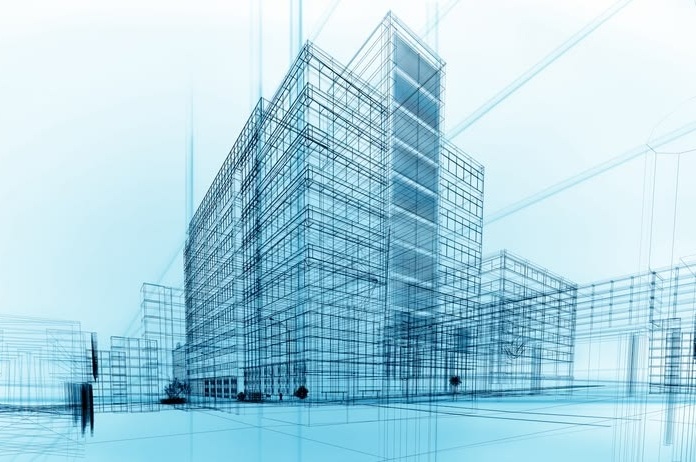
BIM introduces an intelligent 3D modelling environment where every formwork component can be digitally represented, coordinated and evaluated before manufacturing begins.
Wall panels, slab panels, beam components, corner panels, tie arrangements and accessories can be modelled as part of a comprehensive digital formwork system.
This provides better visualisation, improves design understanding and minimises ambiguity between engineering, manufacturing and site execution teams.
2. Clash Detection: Resolving Problems Before They Reach the Site
One of the biggest challenges in formwork engineering is coordinating architectural, structural and service requirements.
Even minor discrepancies can result in panel modifications, fabrication delays and site-level complications.
BIM-based clash detection helps identify potential conflicts involving:
- Wall and slab intersections.
- Beams, columns and structural projections.
- Staircases and lift cores.
- MEP openings and embedded services.
- Panel connections and assembly clearances.
Resolving these issues during the engineering stage reduces costly rework and improves construction efficiency.
The objective is simple: identify problems digitally before they become expensive problems on-site.
3. Parametric Design: Bringing Intelligence into Every Panel
One of the most promising opportunities lies in parametric formwork design.
Imagine a digital environment where individual aluminium formwork panels contain predefined engineering information, including dimensions, extrusion profiles, weight, connection details, identification numbers and manufacturing specifications.
With parametric modelling, design parameters can be modified systematically, reducing repetitive drafting and improving consistency.
For projects involving thousands of individual components, this can significantly improve engineering productivity and design standardisation.
4. Design-to-Manufacturing Integration
The true potential of BIM extends beyond 3D visualisation.
When properly integrated with manufacturing workflows, BIM can bridge the gap between engineering design and fabrication.
A coordinated digital model can support:
- Automated fabrication drawing generation.
- Panel identification and marking.
- Manufacturing data extraction.
- CNC-compatible production information.
- Material planning and optimisation.
- Quality control and dimensional verification.
This creates a more connected workflow between design offices and manufacturing facilities.
5. Smarter Quantity Estimation and Material Optimisation
Accurate material estimation is essential for aluminium formwork projects.
BIM enables model-based quantity extraction, helping engineers determine panel quantities, aluminium requirements, accessories and project-specific components.
More importantly, digital modelling can help evaluate panel standardisation and identify opportunities to optimise material utilisation.
The result can be better cost estimation, improved procurement planning and reduced material wastage.
6. 4D BIM: Connecting Formwork Engineering with Construction Cycles
Aluminium formwork is fundamentally a repetitive construction system.
Its performance depends not only on engineering accuracy but also on the efficiency of installation, concreting, stripping and repositioning cycles.
Integrating BIM with construction scheduling introduces the concept of 4D BIM, where the digital model is connected to project timelines.
This enables simulation of:
- Floor-by-floor formwork installation.
- Wall and slab concreting sequences.
- Stripping and repositioning operations.
- Material movement and site logistics.
- Construction progress and cycle planning.
Such simulations can help contractors identify operational bottlenecks and improve construction planning.
7. Digital Asset Management: Maximising the Value of Reusable Formwork
Aluminium formwork represents a significant investment, and its economic value depends heavily on effective reuse.
Integrating BIM with digital asset management systems can help track individual panels, their specifications, project allocation, modifications, condition and reuse history.
This creates opportunities for better inventory management, more efficient material allocation and improved lifecycle cost control.
The Bigger Picture: The Future of Aluminium Formwork Engineering
BIM should not be viewed merely as another software tool for creating attractive 3D models.
Its real value lies in connecting different stages of the formwork lifecycle through a common digital engineering environment.
The future direction is towards an integrated workflow:
ARCHITECTURAL & STRUCTURAL DESIGN → BIM MODELLING → FORMWORK ENGINEERING → CLASH DETECTION → QUANTITY OPTIMISATION → FABRICATION → SITE EXECUTION → ASSET MANAGEMENT
The next generation of aluminium formwork solutions will increasingly combine engineering expertise, parametric automation, manufacturing integration and digital construction technologies.
At Justform, we believe that the future of aluminium formwork lies in the integration of engineering intelligence with digital technology.
BIM creates an opportunity to move beyond conventional formwork drawings and develop more coordinated, optimised and manufacturing-oriented engineering solutions.
Because ultimately, the success of an aluminium formwork system is not determined by its digital appearance alone. It is determined by how accurately it is engineered, how efficiently it is manufactured and how reliably it performs on-site.
BIM is not just changing how aluminium formwork is designed. It is transforming how it is engineered, manufactured, managed and executed.
Related Posts
Aluminium Formwork: Where Engineering Determines Performance
20 Nov 2021 0Aluminium Empowering The Green Building Revolution
06 Mar 2020 1Modern Method Of Construction- Tunnel Form
06 Mar 2020 0